Technical Architecture for Exergaming Video Game:
- User Interfaces:
- Game Client: This is the primary user interface where players interact with the exergame. It includes graphics rendering, user input processing, and game logic execution.
- User Profiles: Player profiles store personalized data like progress, achievements, and preferences.
- Virtual Environment: The game renders a virtual environment where players perform physical activities.
- Input Devices:
- Motion Sensors: Devices like motion controllers, fitness trackers, or cameras capture players’ movements and translate them into in-game actions.
- Microphone: For voice commands and interactions.
- Game Logic and Mechanics:
- Game Engine: This core component handles physics, rendering, animations, and general game mechanics.
- Activity Recognition: Algorithms analyze input data to recognize specific exercises or movements.
- Gamification: Points, rewards, and achievements encourage players to engage in physical activities.
- Networking:
- Multiplayer: If the game supports multiplayer modes, networking is needed for synchronized gameplay.
- Leaderboards: Online leaderboards can motivate players to compete with others.
- Content Management:
- Game Content: Art assets, sounds, and level designs are stored and managed.
- Updates: Mechanisms for delivering patches and new content to players.
- Analytics and Telemetry:
- Player Data Tracking: Collects data on gameplay patterns, performance, and preferences.
- Usage Analytics: Helps game developers understand player behavior to improve the game.
- Backend Services:
- User Authentication: Securely manages player account information.
- Database: Stores user profiles, progress, and other game data.
- Achievement System: Tracks player accomplishments.
- Matchmaking (if multiplayer): Connects players for multiplayer sessions.
- Platform Integration:
- Console APIs/SDKs: If the game is on consoles, it interfaces with the console’s specific APIs and software development kits.
- Mobile Platform Integration: For mobile exergames, interaction with device features like accelerometers and touchscreens.
Flow Diagram:
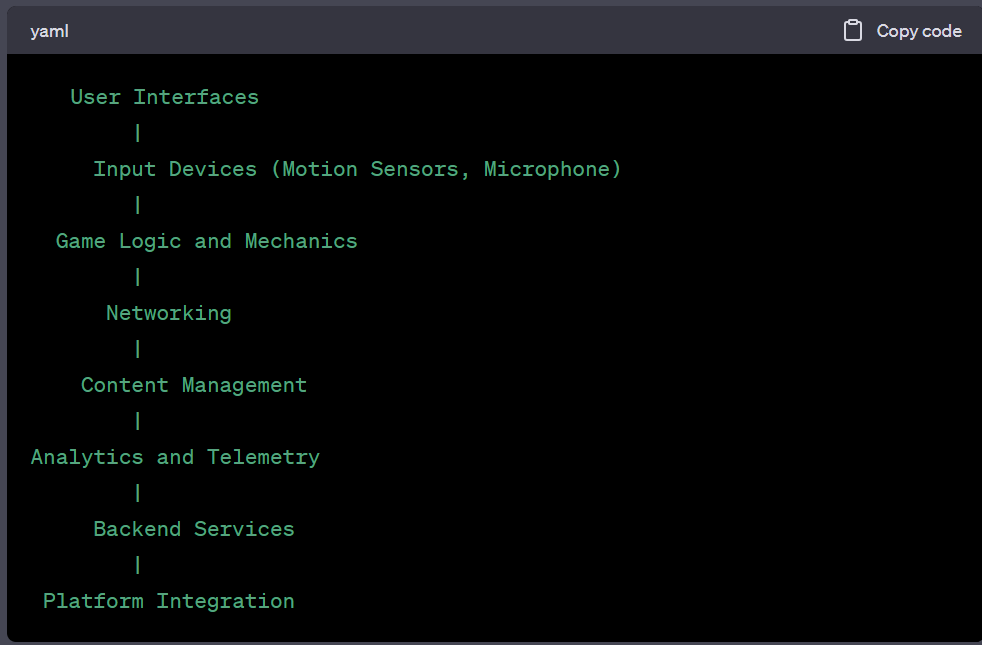
This architecture aims to create an immersive and interactive exergaming experience by integrating input from motion sensors and other devices into the game logic. The game’s backend services manage player data, achievements, and matchmaking, while analytics provide insights for improvement.
Remember, actual implementations can vary, incorporating technologies such as game engines (Unity, Unreal Engine), cloud services, and various programming languages. This conceptual architecture serves as a starting point for building an engaging exergaming video game.